Wednesday, June 22, 2011

June 5, 2011
Today we went shopping early in the morning for souvenirs, which I bought several things, and this afternoon I met up with two of my friends who live here before coming back to the hotel for our lecture and then our last group dinner.
Our lecture consisted of environmental development within Costa Rica, beginning with the ultimate discussion of what sustainability actually is. Of course we say in loose terms that sustainability is the practice of living within our means today so future generations may live without the consequences of our decisions today, but what does it mean in Costa Rica? Mauricio discussed how Costa Rica has a goal to be completely carbon neutral in the near future, but is it feasible? The slogan for Costa Rica's environmental efforts, and perhaps the tourism industry, is "No Artificial Ingredients." To sustain their slogan with activity, the government is investing in payments for environmental services, purchasing lands (in which there is an international competition), ecotourism and bioprospecting. What are the consequences of such actions though? He mentions things such as islands surrounded by pollution because of the single focus, green and gray conservation agendas wrongly presented as independent when they are interdependent, and conservation of biodiversity is actually threatened with such activity. The focus for Costa Rica is land use: when do they create national parks, what are the hints of subtle deforestation via farmers and their cattle, and is the land sustained but used in a practical manner? I think the point of this discussion was to induce thoughts of provocation: when we say we are doing good, do we realize that every action has a reaction that could potentially be harmful? I think the issues were interesting and were necessary to be presented, and feel that Mauricio presented the material in a very thought-provoking manner. It was the perfect way to end our trip in Costa Rica; essentially, after everything we have seen, what is the future of Costa Rica and its' interdependent business, government, and environmental ideologies? Can it continue with conflicting interests?
Our lecture consisted of environmental development within Costa Rica, beginning with the ultimate discussion of what sustainability actually is. Of course we say in loose terms that sustainability is the practice of living within our means today so future generations may live without the consequences of our decisions today, but what does it mean in Costa Rica? Mauricio discussed how Costa Rica has a goal to be completely carbon neutral in the near future, but is it feasible? The slogan for Costa Rica's environmental efforts, and perhaps the tourism industry, is "No Artificial Ingredients." To sustain their slogan with activity, the government is investing in payments for environmental services, purchasing lands (in which there is an international competition), ecotourism and bioprospecting. What are the consequences of such actions though? He mentions things such as islands surrounded by pollution because of the single focus, green and gray conservation agendas wrongly presented as independent when they are interdependent, and conservation of biodiversity is actually threatened with such activity. The focus for Costa Rica is land use: when do they create national parks, what are the hints of subtle deforestation via farmers and their cattle, and is the land sustained but used in a practical manner? I think the point of this discussion was to induce thoughts of provocation: when we say we are doing good, do we realize that every action has a reaction that could potentially be harmful? I think the issues were interesting and were necessary to be presented, and feel that Mauricio presented the material in a very thought-provoking manner. It was the perfect way to end our trip in Costa Rica; essentially, after everything we have seen, what is the future of Costa Rica and its' interdependent business, government, and environmental ideologies? Can it continue with conflicting interests?
June 4, 2011
The morning was amazing: the kayaking was great, the snorkeling was great, and the scenery was beautiful, and I'm a bit upset that we have to leave the beach. We did see a couple of married men on the island we kayaked too with some of the local young ladies, which is a little scary, but that goes to show many motivations of why people come to Costa Rica I suppose. Our kayaking/snorkeling guide was really laid back - he really made the excursion enjoyable and relaxing. The kayaking was strenuous only because I hadn't been lifting weights in awhile, but swimming around the island with some fins and goggles wasn't as difficult. I'm so glad I chose to do this - it's one of those things you never forget you did.
This afternoon we left Samara to go back to San Jose. We were to have a lecture this evening but postponed it to tomorrow afternoon. We just enjoyed the afternoon in San Jose and all went out to dinner together later on. I am definitely going to miss Costa Rica...not San Jose so much, but the more rural and undeveloped areas are what I will miss. I have enjoyed the people I have had the opportunity to meet and come to know, particularly the people I have been traveling with because let's face it, when everyone smells funny, sleeps on a bus together, hikes through the jungle together and experiences together, you get to know people just a little bit more. I'm looking forward to going home, but I am very lucky to have had the opportunities that Costa Rica has offered.
This afternoon we left Samara to go back to San Jose. We were to have a lecture this evening but postponed it to tomorrow afternoon. We just enjoyed the afternoon in San Jose and all went out to dinner together later on. I am definitely going to miss Costa Rica...not San Jose so much, but the more rural and undeveloped areas are what I will miss. I have enjoyed the people I have had the opportunity to meet and come to know, particularly the people I have been traveling with because let's face it, when everyone smells funny, sleeps on a bus together, hikes through the jungle together and experiences together, you get to know people just a little bit more. I'm looking forward to going home, but I am very lucky to have had the opportunities that Costa Rica has offered.
June 3, 2011

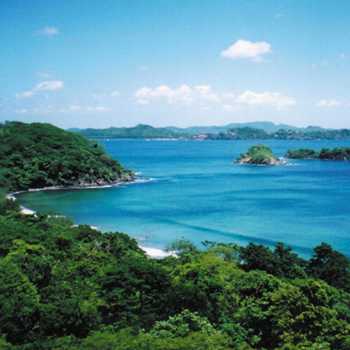
Below are a few photos courtesy of the internet to give you an idea of Samara Beach...we were all too excited to actually take photos during the 24 hours that we were there.
(www.montanasamarabeach.com)
(www.cactustefl.com)
Pretty great, huh? Tomorrow we are doing a little sea kayaking and snorkeling, then heading back to San Jose. I can't complain too much about life currently.
June 2, 2011
After a very early morning breakfast, meaning 4:45am, we met up and and began our trek up the mountains of the community around 5:30. The hike was difficult to do with a walking stick, but the views of the valley were incredible. What I always enjoy about hiking is looking out and feeling minuscule compared to what is before you - makes you reassess things, in a sense. The community guides were very helpful and always made sure everyone was keeping up, so you could tell this was part of their tourism business of the home stays. It makes me wonder how many people actually come for these home stays, because from what I think of Americans, many of them that can afford Costa Rica for a vacation would not choose to live in such rugged and rural areas. The home stay so far was very rough; as in there was an ant farm in my bed and it was so humid you could hardly breathe. This is not complaining by any means, because I prefer these kinds of trips to see how people around the world legitimately live, but for those who enjoy the comforts they often take for granted, this would be an entirely new type of vacation.
In the afternoon we took a boat tour, complete with a blinding thunderstorm, and it was very refreshing to be drenched in all the water. What was great was to meet a few fellow Americans studying at the University of Costa Rica; they really seem to be enjoying what they are doing so far. We saw massive iguanas and crocodiles in the river as well; overall it was a very pleasant afternoon.
This evening we took the time to enjoy our host families, including watching a Sylvester Stallone film "Cobra." Dinner was great, as usual, and after watching the film Kristen and I went to bed instantly. We are on the road again to Samara Beach in the morning - and I don't think this blog post can express the communal excitement to finally get to the famed beaches of Costa Rica.
In the afternoon we took a boat tour, complete with a blinding thunderstorm, and it was very refreshing to be drenched in all the water. What was great was to meet a few fellow Americans studying at the University of Costa Rica; they really seem to be enjoying what they are doing so far. We saw massive iguanas and crocodiles in the river as well; overall it was a very pleasant afternoon.
This evening we took the time to enjoy our host families, including watching a Sylvester Stallone film "Cobra." Dinner was great, as usual, and after watching the film Kristen and I went to bed instantly. We are on the road again to Samara Beach in the morning - and I don't think this blog post can express the communal excitement to finally get to the famed beaches of Costa Rica.
June 1, 2011
Our lecture this morning on the Eco Lodge was similar to the previous one, but the most interesting part is that they continue to expand the number of cabins they have, which is roughly 20 right now I believe, and the horses surrounding the site is owned by the lodge. They do not receive as many visitors as the previous Eco Lodge in La Fortuna, but none the less, it is an impressive and interactive facility. Around the site you will see signs pointing to various plants and wildlife explaining its' significance. I really enjoyed this site and hope to return someday, especially for zip-lining, horse-back riding, and hiking!
Because our morning recreational plans did not happen as anticipated, we continue to our last business meeting with Astra-Rocket, and from there we continued to our second host stay site in Corralilla in the Nicoya region. Astra-Rocket is an intense and very advanced facility; one you wouldn't think would be in this region of Costa Rica. Apparently, though, Nicoya was the first official establishment of the Europeans centuries ago, and its' regional importance continues to exist. Ronald Diaz, the brother of famed Franklin Diaz, an astronaut in Costa Rica but resides in Houston, Texas, is the head of this facility as he is responsible for the technology being produced at Astra-Rocket. What they are working on is the VASIMR engine for space shuttles: an engine very savvy and more efficient for rockets. They are also working on other technologies, such as breaking up waste as a physical rather than chemical reaction. Of course the market for the VASIMR engine is very restricted, but I was not as compelled by the engine as I was their initiatives for waste management: an issue many people do not consider in terms of environmental policies. By 2014 they anticipate sending their VASIMR engine to space, and if all goes as hoped, this engine could be the new technology for space crafts altogether. It's really exciting everything they are doing, and the technology itself in that facility is overwhelming. For those who enjoy technology, this is a place you have to see!
After visiting the coastal areas of Nicoya we continued to our home stays, which is just about as desolate as the previous home stay site. We were welcomed with traditional dancing and merriment upon arrival by the young ladies of the community...everyone was so friendly! We had a great time enjoying the locals, and afterwards we dispersed to our appropriate sites. The dinner we had in the evening was great, and Kristen and me were able to practice our Spanish-speaking skills, asking about their homes and local activities. The people we are staying with are very sweet, and they have very young daughters, and we enjoyed playing with them and enjoying their company. Tomorrow we are going on a hike and boat tour around the community, so I'm excited about seeing more of the environment within this area of Costa Rica.
Because our morning recreational plans did not happen as anticipated, we continue to our last business meeting with Astra-Rocket, and from there we continued to our second host stay site in Corralilla in the Nicoya region. Astra-Rocket is an intense and very advanced facility; one you wouldn't think would be in this region of Costa Rica. Apparently, though, Nicoya was the first official establishment of the Europeans centuries ago, and its' regional importance continues to exist. Ronald Diaz, the brother of famed Franklin Diaz, an astronaut in Costa Rica but resides in Houston, Texas, is the head of this facility as he is responsible for the technology being produced at Astra-Rocket. What they are working on is the VASIMR engine for space shuttles: an engine very savvy and more efficient for rockets. They are also working on other technologies, such as breaking up waste as a physical rather than chemical reaction. Of course the market for the VASIMR engine is very restricted, but I was not as compelled by the engine as I was their initiatives for waste management: an issue many people do not consider in terms of environmental policies. By 2014 they anticipate sending their VASIMR engine to space, and if all goes as hoped, this engine could be the new technology for space crafts altogether. It's really exciting everything they are doing, and the technology itself in that facility is overwhelming. For those who enjoy technology, this is a place you have to see!
After visiting the coastal areas of Nicoya we continued to our home stays, which is just about as desolate as the previous home stay site. We were welcomed with traditional dancing and merriment upon arrival by the young ladies of the community...everyone was so friendly! We had a great time enjoying the locals, and afterwards we dispersed to our appropriate sites. The dinner we had in the evening was great, and Kristen and me were able to practice our Spanish-speaking skills, asking about their homes and local activities. The people we are staying with are very sweet, and they have very young daughters, and we enjoyed playing with them and enjoying their company. Tomorrow we are going on a hike and boat tour around the community, so I'm excited about seeing more of the environment within this area of Costa Rica.
May 31, 2011
We left La Fortuna today to venture off to Rincon de la Vieja, another cool eco-friendly area of Costa Rica. My classmates went on a hike on the way to our overnight site, but unfortunately I had to miss out (catch their blogs for details!). The site itself is pretty great - there are personal cabins tourists can stay in and horses all around the grounds, so for me personally, this was my favorite location to stay overnight. Next time, I would like to ride the horses, though! We enjoyed ourselves for the evening with relaxing (except for us girls, who decided an ab workout and yoga session were in need with the plethora of rice and beans we had been consuming). This site is considered to be another Eco Lodge, and tomorrow morning we anticipate a lecture on how this particular tourist area began.
Please refer to others' blogs for cool photos for the rest of the trip...there were so many beautiful areas we had the opportunity to visit!
Please refer to others' blogs for cool photos for the rest of the trip...there were so many beautiful areas we had the opportunity to visit!
May 30, 2011
Well, today was not my best day in Costa Rica. I enjoyed it, absolutely, but unfortunately the waterfall we visited today claimed my camera and two of my toes as I slipped on a rock and broke them. Still can't complain though - I'm in Costa Rica!
We began the day with a post-breakfast lecture on this particular Eco Lodge we are staying with; its history and the processes of becoming and maintaining "Eco Lodge" status. So, 18 years ago this Eco Lodge began as a Ecotourist hostel with only four rooms to loan out, and the time there were only three hotels in La Fortuna. There were several public institutions within Costa Rica, as well as outside benefactors in the Netherlands, that assisted the Eco Lodge initiative with loans. After several loans, this particular family who owns La Catarata Eco Lodge (where we are staying) began seeing return as more tourists came to the area. After difficulties in being approved by the bank, this family has been owning this Eco Lodge for four years. These loans were to enhance the infrastructure of the hotel, as well as purchasing services making this lodge for eco-friendly (like more efficient washer/dryer systems, investing in solar energy and power, etc.). I'm very impressed with the facility in general and really anticipate that this business will only continue to expand with the popularity of "sustainability" going to be globally-recognized.
We drove to the waterfall next, and being an avid waterfall-jumper myself, I could not have been more excited to see this thing. Of course you will notice by the photograph below that I could not jump because of the size and magnitude of this fall, but swimming and enjoying the sunlight was pleasing. As I said, my camera and toes did not come out victorious against the waterfall, so there will not be many photos after this post - enjoy them while you can! Besides this, I loved the waterfall and it made me appreciate just how beautiful Costa Rica is.


We began the day with a post-breakfast lecture on this particular Eco Lodge we are staying with; its history and the processes of becoming and maintaining "Eco Lodge" status. So, 18 years ago this Eco Lodge began as a Ecotourist hostel with only four rooms to loan out, and the time there were only three hotels in La Fortuna. There were several public institutions within Costa Rica, as well as outside benefactors in the Netherlands, that assisted the Eco Lodge initiative with loans. After several loans, this particular family who owns La Catarata Eco Lodge (where we are staying) began seeing return as more tourists came to the area. After difficulties in being approved by the bank, this family has been owning this Eco Lodge for four years. These loans were to enhance the infrastructure of the hotel, as well as purchasing services making this lodge for eco-friendly (like more efficient washer/dryer systems, investing in solar energy and power, etc.). I'm very impressed with the facility in general and really anticipate that this business will only continue to expand with the popularity of "sustainability" going to be globally-recognized.
We drove to the waterfall next, and being an avid waterfall-jumper myself, I could not have been more excited to see this thing. Of course you will notice by the photograph below that I could not jump because of the size and magnitude of this fall, but swimming and enjoying the sunlight was pleasing. As I said, my camera and toes did not come out victorious against the waterfall, so there will not be many photos after this post - enjoy them while you can! Besides this, I loved the waterfall and it made me appreciate just how beautiful Costa Rica is.


The afternoon was spent at an indigenous attraction, yes I will say attraction, with the Maleku tribe of Costa Rica to learn more about their culture and practices. With all of the interest I have for indigenous tribes in Latin America, I was not impressed with how 'sold out' this tribe had become to the tourism industry. To better explain, this site that we visited was not even part of the indigenous tribe's land, rather it was purchased so they may put on a performance to play into foreigners' opinions of "indigenous" - which was more a less something I think should have been put on as a local theatrical site. This was the most disappointing venture within Costa Rica - the only disappointing, to correct myself - and it is only because nothing was serious or interesting about this visit. It was almost a mockery of the Maleku tribes, and I was upset to see it so dramatized.
Sunday, June 19, 2011
May 29, 2011
Everyday I keep saying this is my favorite place, but La Fortuna is by far the most beautiful area we have seen thus far. After a bittersweet goodbye this morning from San Marcos, we set off to experience an Eco-lodge in La Fortuna and some hot springs (which, by the way, are the best I have yet to see in Latin America). Again, the natural park infrastructure is amazing - Costa Rica has tourism down to an art, it appears. The Eco-lodge is very impressive, very clean yet very intuitive with nature...I feel like we are within the woods while still enjoying our humanly comforts. Tomorrow we will have a lecture with the lodge owner and will be able to discuss this further.


The above photo is our view from the Eco-lodge: Volcan Arenal (also an active volcano). I can't complain too much walking to breakfast in the morning to see this view. We are obviously in more of the rain forest area of Costa Rica so everything appears more exotic in the photos, but it is very dense and humid here. Tomorrow we will be visiting a waterfall and an indigenous tribe so it will be an interesting day in terms of more natural sites and historically and culturally-inclined business.


The above photo is our view from the Eco-lodge: Volcan Arenal (also an active volcano). I can't complain too much walking to breakfast in the morning to see this view. We are obviously in more of the rain forest area of Costa Rica so everything appears more exotic in the photos, but it is very dense and humid here. Tomorrow we will be visiting a waterfall and an indigenous tribe so it will be an interesting day in terms of more natural sites and historically and culturally-inclined business.
May 28, 2011
Today was spent completely with the community and our host family despite feeling ill throughout the day. We began by having a tour through different farms learning the production processes. We visited a finca de pina (pineapple farm), learned about yucca plants, coconut trees, cattle-raising, how pineapples grow and are harvested, and the sustainable efforts they are taking to become more efficient overall while remaining sustainable and organic. I have to admit, the pineapple we tasted there was the most delicious I have ever tried. We finished our tour by visiting our host family's barn, where we learned about the natural manure-and-worm filtering process to make the manure reusable for energy purposes. I feel we from the United States have much to learn from these workers; I was very impressed. We also had the opportunity to enjoy coconut water and meat.


We enjoyed the evening by driving to see a pleasant view of sunset and eating a good home-cooked meal (I've been missing those, by the way). Tomorrow we will have the opportunity to milk the cows...which I have never done, so wish me luck! I think the most notable aspect to take from this home stay, which I noticed in Ecuador as well, is how satisfied and happy these folks seem to be here. Technology here is lacking, well, it still exists here but not as frequently in more urban areas, and still they find joy in the most simple things. It almost makes you wonder what makes a "fulfilled life," or whatever that means - I think it varies across individuals and cultures, but having the opportunity to experience this community has definitely planted a seed for thought. We leave tomorrow morning and I am sad to go, but am happy to have had this experience.
May 27, 2011
We left San Jose today to visit other parts of Costa Rica. First we stopped by the Volcan Poas, an active volcano near San Jose in Alajuela. It was beautiful, and we were able to hike to a lagoon not too far from the crater. I had never had the opportunity to see an active volcano so it was a special occasion. The national park industry in Costa Rica is clearly well developed with their infrastructure, which I will continue to mention, as the hike to the crater and lagoon was made easy with paved sidewalks and pleasant little convenient stores with restrooms to explore before and after the hike.


We continued on to our first home-stay sight in San Marcos de Cutris. I was very excited about this - an opportunity to improve my Spanish and see the region. Of course it was humid and full of bugs, but it only enhanced the experience; made it more real in a sense. This community essentially thrives on subsistence farming and agricultural trade among communities as this is a very desolate area. The locals said that relatively 300 people live in San Marcos which to me is a significant number.


Later in the afternoon we visited the privately-owned Doka coffee plantation where we learned about the process of how the making of coffee occurs. Apparently this plantation employees 400 migrant workers a season for picking the coffee cherries and during the season, they provide housing, benefits, and a kindergarten for children. I was impressed with the infrastructure and treatment of their workers, but was curious as to other less endowed plantations and how amiable they are to their staff. The capital used to process and select the cherries for packaging was very impressive - clearly this plantation has been running for awhile as their machinery was savvy and their staff well-informed of the coffee-making. I was impressed with the tour guide as he was very open with his answers in regards to whatever questions I asked, whereas other tours I have been on have provided less-than-open answers to my questions, particularly to sensitive questions like labor and production.

Friday, June 10, 2011
May 26, 2011
We visited la Universidad de Costa Rica, a public university with an outstanding reputation. We had a lecture on free trade agreements where Maria-Paula, a professor who specializes in tourism, provided a critical analysis on free trade practices and the reality of them. While I appreciated her blunt delivery, it was difficult, in like so many other lectures I have attended around the globe, to take a professor seriously who does not provide a resolution or a contention for a positive change, rather provides a plethora of criticisms and negative facts, particularly towards the U.S. (which, yes, it is deserved in many cases). Not being a business major I have seen these negative impacts of U.S. free foreign trade agreements around the world, but being more explicitly an economist, I have noticed that business, like so many other practices, are about "the game". While free trade does manipulate cheap labor and lousy product handling, it is not solely the blame upon the United States. So take Costa Rica - yes, the pineapple and banana industries here are not the greatest when it comes to free trade, but should we blame it on those we trade with, or those who make the agreement from your own country more specifically aware of the malpractices?

Anyway, after visiting and touring the university (which is very beautiful), we went to the National Museum and National Theater and learned quite a bit about the history of Costa Rica, and got to see some of the more European-inspired architecture near the center of the capital city.
This isn't a very long post, but I will say that the lectures thus far given by the professors has given our class food-for-thought, particularly regarding the case of Costa Rica. For me it is nothing I haven't heard before, but the explicit and vivacious animosity typically portrayed by Costa Rica, and even some of the professors themselves, make me wonder how blissfully happy this country really portrays itself to be. Clearly it is an advertisement for tourism, I know that much, but even the Ticos will play into that image because most are aware of how tourism plays such a huge role in their economic livelihoods. Just something interesting to think about...

Anyway, after visiting and touring the university (which is very beautiful), we went to the National Museum and National Theater and learned quite a bit about the history of Costa Rica, and got to see some of the more European-inspired architecture near the center of the capital city.
This isn't a very long post, but I will say that the lectures thus far given by the professors has given our class food-for-thought, particularly regarding the case of Costa Rica. For me it is nothing I haven't heard before, but the explicit and vivacious animosity typically portrayed by Costa Rica, and even some of the professors themselves, make me wonder how blissfully happy this country really portrays itself to be. Clearly it is an advertisement for tourism, I know that much, but even the Ticos will play into that image because most are aware of how tourism plays such a huge role in their economic livelihoods. Just something interesting to think about...
May 25, 2011
Today we went to three different hospitals to examine the differences between private and public hospitals, as well as further understand the medical tourism industry. First, we went to a private hospital Clinica Biblica, where they provide medical tourism, which apparently is an industry exclusive to private institutions. The amount of technology they have, as well as the single-room accomodations for patients, was very overwhelming in general. The hospital was very quiet and the staff very friendly, but how could it not be with such ideal organization? The nurse providing the tour discussed that prices of procedures at this particular institution are ¼ the prices of those in the United States, which is why medical tourism is so popular. The hospital provides an entire package for medical tourists, including tours and transportation. Medical tourists will typically stay in Costa Rica for 10 to 12 days for their procedures and recoveries. 10 to 12 percent of the 17 percent medical tourist rate that comes from the United States. This hospital overall was very small and an incredible facility, where soon they will be building a sustainable parking deck including charging for electric cars. It was a very impressive facility but it is very apparent that the hospital is stricly funded via private monies.

The National Hospital, a public institution, was completely different from Clinica Biblica. No wonder medical tourists do not attend public institutions (besides the fact that most cannot); the hospital overall was not very sanitary, rooms were six people to a single room and were not isolated from the exterior of the hospital, and the hospital was very crowded in general. This hospital specifically focused on gerentology, so imagine the amount of people in the three general public hospitals in San Jose. There are other hospitals as well that have other specialties, such as pediatric care. The lack of funding for this hospital has forced them to not have a 24 hour emergency center. Essentially this hospital was doing the best it could with the resources it had, even physicians who earn 2,000 USD per month as chiefs, whereas physicians at private institutions earn 10,000 USD per month. I was impressed with the amiable personality of the chief depite how obviously underfunded and lacking this facility is.

Finally we went to CIMA, one of the largest hospitals I have ever seen and a premier location for medical tourists. The hospital was incredible, having JCI accreditation and extensive technologies, as wel as rooms with suites for single patients and their families. This facility is provided information via independent agencies who set up the tourists packages, and will be prepared for them when they arrive. This hospital does focus on the locals of San Jose, or so they say, even providing travel for physicians to go to more rural areas, but clearly the emphasis of this institution is business. It was surprising to find out that the hospital only has 58 rooms with its' magnanimous size. 30% of CIMA's patients are medical tourists. According to our guide, the challenges for CIMA are that it is metric-driven so it is difficult to justify new technologies, the local cultures, as well as working with individual physicians rather than teams of physicians, which is typical to medical practices globally. Even services such as those given by medical physicians apparently is business-oriented as well: where teams of physicians work together for a mutual salary, individual physicians can price-gouge their own treatment plans and operations as they wish...at least from my personal economic perspective. The facility overall was comparable to those in the United States and sustainable practices were seemingly limited with the hospital focused on business revenues.

Coming from an economic perspective with an academic history invested in researching medical tourism, particularly the push and pull factors guiding Americans abroad, it was fascinating to actually put a face and physical atmosphere to all of the facts and figures. The research seems to be true: medical tourism, though I was not able to get into personal files or delve deeper into the facilities themselves, fuel local economies and save money for those who are seeking medical care, particularly if they are the most expensive cardiovascular or plastic surgery operations. I was amazed to see the differences and hospitals that provided medical tourism and those who did not; it almost took a physical form of differentiating between "developed" and "developing" from technologies and services provided, to the facilities themselves. I was very pleased with the day overall and enjoyed the ability to personally substantiate that which I had been researching for months now.

The National Hospital, a public institution, was completely different from Clinica Biblica. No wonder medical tourists do not attend public institutions (besides the fact that most cannot); the hospital overall was not very sanitary, rooms were six people to a single room and were not isolated from the exterior of the hospital, and the hospital was very crowded in general. This hospital specifically focused on gerentology, so imagine the amount of people in the three general public hospitals in San Jose. There are other hospitals as well that have other specialties, such as pediatric care. The lack of funding for this hospital has forced them to not have a 24 hour emergency center. Essentially this hospital was doing the best it could with the resources it had, even physicians who earn 2,000 USD per month as chiefs, whereas physicians at private institutions earn 10,000 USD per month. I was impressed with the amiable personality of the chief depite how obviously underfunded and lacking this facility is.

Finally we went to CIMA, one of the largest hospitals I have ever seen and a premier location for medical tourists. The hospital was incredible, having JCI accreditation and extensive technologies, as wel as rooms with suites for single patients and their families. This facility is provided information via independent agencies who set up the tourists packages, and will be prepared for them when they arrive. This hospital does focus on the locals of San Jose, or so they say, even providing travel for physicians to go to more rural areas, but clearly the emphasis of this institution is business. It was surprising to find out that the hospital only has 58 rooms with its' magnanimous size. 30% of CIMA's patients are medical tourists. According to our guide, the challenges for CIMA are that it is metric-driven so it is difficult to justify new technologies, the local cultures, as well as working with individual physicians rather than teams of physicians, which is typical to medical practices globally. Even services such as those given by medical physicians apparently is business-oriented as well: where teams of physicians work together for a mutual salary, individual physicians can price-gouge their own treatment plans and operations as they wish...at least from my personal economic perspective. The facility overall was comparable to those in the United States and sustainable practices were seemingly limited with the hospital focused on business revenues.

Coming from an economic perspective with an academic history invested in researching medical tourism, particularly the push and pull factors guiding Americans abroad, it was fascinating to actually put a face and physical atmosphere to all of the facts and figures. The research seems to be true: medical tourism, though I was not able to get into personal files or delve deeper into the facilities themselves, fuel local economies and save money for those who are seeking medical care, particularly if they are the most expensive cardiovascular or plastic surgery operations. I was amazed to see the differences and hospitals that provided medical tourism and those who did not; it almost took a physical form of differentiating between "developed" and "developing" from technologies and services provided, to the facilities themselves. I was very pleased with the day overall and enjoyed the ability to personally substantiate that which I had been researching for months now.
Saturday, June 4, 2011
May 24, 2011
We started the day by visiting Ticos Electronicos, a company still utilizing human labor but producing materials mostly for the aeronautics and aerospace industries, where capital is outsourced to the company to actually make the products. It was interesting to find that more women than men were employed by the company because generally women are more detailed-oriented, according to the president of Ticos Electronicos. The difficulty in touring such a facility was understanding everything they produce, because the question I consistently asked myself was why they did not use machines for their production rather than human labor. It is a double-edged sword when thinking of the fact that they use human labor, however the company was providing employment for at least 400 people. I always wonder what the managers are not telling us on such tours, particularly related to the working conditions of their labor, but overlal it seemed like a decent operation.

Our afternoon session involved visiting the business school INCAE, which is a very pretigious program but not often heard of. We met with the admissions director who described the masters´programs which utilized the case-method approach of study, which I found very appropriate in relation to their academic mission of building future leaders who can legimitely solve problems. Our speaker is a former student who is very intelligent, but I had a difficult time understanding how and if the school aided the sustainability and business efforts of the sorrounding communities and Costa Rica in general (a similar thought towards Ticos Electronicos as well). Though they are an international program, the school would be hard-pressed to find better opportunities of building future leaders as to helping Costa Ricans generate business practices to help build their economy. It was interesting to think that such a school exists in the Alajuela province of the country, but overall I found the information seeling the school to be useful for admissions´purposes. As a not-for-profit institution, it was very interesting to learn about the school in general.


Our afternoon session involved visiting the business school INCAE, which is a very pretigious program but not often heard of. We met with the admissions director who described the masters´programs which utilized the case-method approach of study, which I found very appropriate in relation to their academic mission of building future leaders who can legimitely solve problems. Our speaker is a former student who is very intelligent, but I had a difficult time understanding how and if the school aided the sustainability and business efforts of the sorrounding communities and Costa Rica in general (a similar thought towards Ticos Electronicos as well). Though they are an international program, the school would be hard-pressed to find better opportunities of building future leaders as to helping Costa Ricans generate business practices to help build their economy. It was interesting to think that such a school exists in the Alajuela province of the country, but overall I found the information seeling the school to be useful for admissions´purposes. As a not-for-profit institution, it was very interesting to learn about the school in general.

May 23, 2011
Arriving in Costa Rica was very interesting compared to other Latin American countries I have experienced. San Jose is not the most impressive city, but the diversity amongst the population is striking. It is apparent that individuals from European, African and Indigenous decents are living in relative harmony in this unkept city.
Our lectures this evening involved an introduction to the couse and Costa Rica in general, as well as discussing the political and social history of the country. The most intruiging aspect of the introductory lecture was the consistent fluidity of migration within and around Costa Rica, from farmhands to tourists, but particularly in reference to the tourism industry. The significance of the political history lesson was how after the coup and civil war of 1948 rose the social question: how do we continue to improve governmental organizations and structures for Costa Rica citizens? In the two month war of 1948, which resulted in 200 deaths, there were four groups fighting one another: Communists, Oligarchy-supporters, Calderonistas and Small farmers. The most interesting implication of the social question in the 1940´s is the fact that the armed forces were disseminated, but the actual armaments are buried in the fincas of Cartoga, ¨just in case.¨What does this imply? The that dismemberment of the military was simply a means of propaganda for the new society of Costa Rica, but it can take up its´previous political state at any time.
Overall, it was beneficial to see Costa Rica as everything but the general global branding of the nation, particularly in reference to the ¨happy and eco-friendly¨name, as they really use this to generate foreign revenues via tourists.
Our lectures this evening involved an introduction to the couse and Costa Rica in general, as well as discussing the political and social history of the country. The most intruiging aspect of the introductory lecture was the consistent fluidity of migration within and around Costa Rica, from farmhands to tourists, but particularly in reference to the tourism industry. The significance of the political history lesson was how after the coup and civil war of 1948 rose the social question: how do we continue to improve governmental organizations and structures for Costa Rica citizens? In the two month war of 1948, which resulted in 200 deaths, there were four groups fighting one another: Communists, Oligarchy-supporters, Calderonistas and Small farmers. The most interesting implication of the social question in the 1940´s is the fact that the armed forces were disseminated, but the actual armaments are buried in the fincas of Cartoga, ¨just in case.¨What does this imply? The that dismemberment of the military was simply a means of propaganda for the new society of Costa Rica, but it can take up its´previous political state at any time.
Overall, it was beneficial to see Costa Rica as everything but the general global branding of the nation, particularly in reference to the ¨happy and eco-friendly¨name, as they really use this to generate foreign revenues via tourists.
Subscribe to:
Comments (Atom)